

How to Become a Life Coach—And Why Everyone Should Learn Life Coaching Skills
When I first hired a life coach, I was going through one of the hardest seasons of my life. I was navigating a painful separation after 17 years of marriage, raising my young daughter, and facing challenges in a volatile work environment with constant leadership turnover.
I thought I needed help managing external (very real) circumstances, but what I didn’t expect was the profound shift that would happen internally.
That’s what life coaching did for me.
It showed me that my circumstances didn’t determine the quality of my life—I did, based on the way I was thinking about them. And that I had so much more agency and control than I realized.
That’s when everything changed.
Why Life Coaching Isn’t Just for Coaches
Before we go any further, let’s clarify a few things:
Life coaching isn’t just for people who want to become coaches.
It’s for anyone who wants to understand themselves better, lead themselves with more compassion, and create a life that feels aligned, steady, and true.
And the truth is—we need these skills now more than ever.
We’re living in a world where emotional resilience is an essential resource. Where disconnection is high, trust is low, and our nervous systems are often in overdrive. Life coaching gives you practical, powerful tools to navigate all of this—without bypassing or pretending.
In fact, I believe that everyone should know how to coach themselves.
Personally, I believe we should be taught in school how to work with our thoughts, regulate emotions, and build kind, honest relationships with ourselves.
But since we’re not... that’s where life coaching comes in.
What Does a Life Coach Actually Do?
Unlike therapy, which is often focused on healing the past, life coaching is future-focused. It helps you understand:
What you believe and why you see your life and the world the way you do
How your thoughts create your feelings
How your emotions influence everything you do (and don’t do)
How to make intentional decisions, set goals, and follow through
It’s the art of turning awareness into aligned action. It’s about creating your life on purpose.
The coaching skills I’ve learned have helped me:
Leave a corporate career—despite being terrified to walk away from the “safety net”
Heal my nervous system after a heartbreaking divorce, fall in love, and blend a beautiful new family
Raise my daughter with more presence and intention, and less control and frustration
Take care of my health and well-being—without the guilt
Ditch people-pleasing for good!
And every single one of those outcomes started with self-coaching—not someone else telling me what to do, but me learning to guide myself.
But Isn’t Life Coaching Unregulated?
Yes. And that’s exactly why where and how you train as a coach matters deeply.
Life coaching is currently an unregulated industry, which means anyone can call themselves a coach without formal education or ethical training. That can be empowering—but it also comes with great responsibility.
If you’re going to work with people’s minds, hearts, and nervous systems, you need to do it with care.
You need tools that are grounded, trauma-informed, and human-centered.
And you need to know how to hold space that’s safe, not performative.
Why Ethical, Trauma-Informed Training Matters
Life coaching is a powerful tool—and with that power comes responsibility.
Because coaching is an unregulated industry, not all trainings are created equal. Ethical coaching isn’t about telling people what to do, pushing through emotions, or “mindset-over-everything” approaches. It starts with one foundational principle: do no harm.
That means understanding that many people carry unresolved experiences, stress, and emotional patterns—even if they don’t label them as trauma. A well-trained coach knows how to work with thoughts and emotions without diagnosing, pathologizing, or pushing someone beyond what’s appropriate.
Coaching is not therapy. And ethical coaches know that distinction deeply.
This is one of the reasons I structured the Golden Coaching Certification™ to begin with self-coaching. Before you ever learn to coach another person, you learn how to work with your own nervous system, your own thinking, and your own emotional responses—with compassion and clarity.
When coaches are grounded in self-awareness, consent, and clear boundaries, coaching becomes not only effective—but also safe, respectful, and profoundly empowering.
That’s Why I Created the Golden Coaching Certification™
When I became a full-time coach, I knew I wanted to offer something different.
I didn’t want to churn out carbon-copy coaches who all sounded the same.
I wanted to train women who lead with integrity—who want to coach the whole human, not just reframe their thoughts.
And now, after thirteen years, multiple certifications, training thousands of coaches, and coaching thousands more on every topic you can imagine, I’ve created something new—something even more thoughtful, flexible, and accessible.
The Golden Life Coaching Certification Program™ now includes two clear paths:
Path One: Golden Self-Coaching Foundations
This is the path for women who want to feel better—not become a coach (yet).
It’s for those who:
Are in a season of healing, reflection, or transition
Want to feel calmer, kinder, and more emotionally steady
Are tired of just reading self-help books and want real tools that work
Want to learn how to coach themselves through anything life brings
Includes:
Weekly Live Lessons
Q&A + Integration Calls
Self-Coaching Tools + Workbooks
Private Slack Community
Path One + Two: The Full Golden Coaching Certification™
This is for those who know they want to coach others—whether professionally or as leaders, mentors, or entrepreneurs.
You’ll receive:
Everything in Part One
Coaching Demonstrations
Peer Practice Coaching
Coaching Ethics + Tools
Personal Mentorship from Me
Official Certification
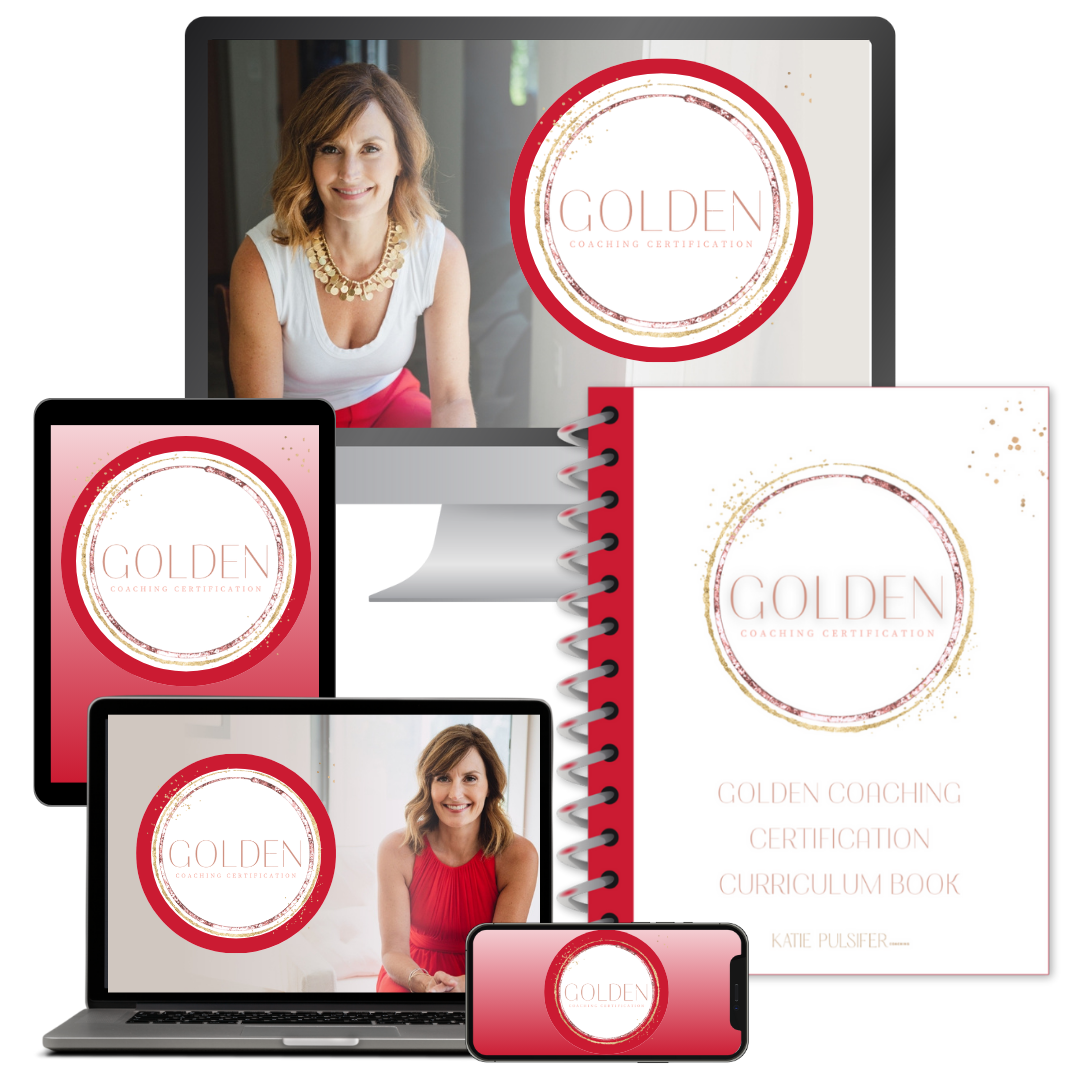
The Golden Life Coaching Certification Program materials
How to Know If It’s Time
You might already be the person your friends come to for advice.
Or feel like a natural mentor, a deep feeler, or a quiet leader.
You might be the steady one—the grounded presence that everyone seeks out.
But maybe you’ve never had the tools. Or the personalized mentorship and structure to go deeper.
This training is where you begin.
Whether your next right step is learning to coach yourself… or preparing to coach others… I’d love to meet you.
Ready to Explore?
I’m not doing a big launch or ad campaign.
I’m having real, personal 1:1 conversations with anyone who’s curious.
If you’re feeling the pull, book a Clarity Call with me.
We’ll talk through your questions, your hopes, and whether this training is aligned with your life right now.
Learn more and enroll: www.katiepulsifercoaching.com/certification
Book your Clarity Call: katiepulsifercoaching.as.me/goldencoach
Final Word: Coaching Isn’t Just a Career. It’s a Way of Living.
Even if no one ever pays you to coach, your return on investment from learning to coach yourself will be priceless. Because when you lead yourself with clarity and compassion, everything else changes.
You get to feel more like yourself again.
And maybe even whisper:
"I wonder what else is possible now..."
If you’re considering becoming a coach, I strongly encourage you to ask any training program how they approach ethics, trauma awareness, and scope of practice.
Those answers matter more than marketing promises ever will.
