
No. Life coaching is an unregulated industry, so no law requires a certification, and anyone can call themselves a coach. But a good certification gives you what passion alone can't: real tools, a code of ethics, and the skill to keep someone safe while you help them. What it can't give you is the confidence most new coaches are actually waiting for. That part is yours to build.
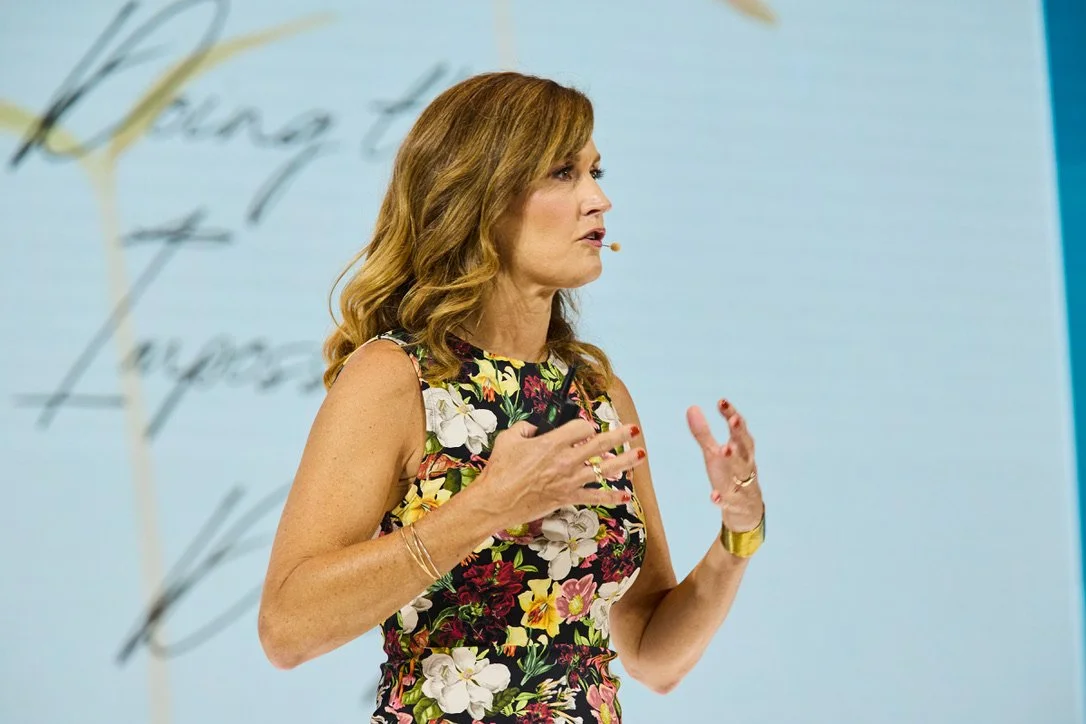
I've trained more than 4,000 coaches over 13 years, and I coached without a certification first. So I can tell you what each side looks like.
Is life coaching regulated?
No. Therapy is a regulated industry. Coaching is not. There's no license, no required exam, and no governing board, and the field keeps growing. The International Coaching Federation counted a record 122,974 coach practitioners worldwide in 2025, up 15% since 2023.
I tell my certification students this: because we are an unregulated industry, I feel very, very, very strongly that each of us has the weighty responsibility to uphold the highest ethical standards. A few bad apples can ruin it for the rest of us. That makes it even more important for us to put good work into the world.
Why did I decide to get certified?
I hired a coach and worked with her for three years. It completely changed my life, in all the most amazing ways, through the end of a marriage and leaving my corporate career. The people in my circle were captivated by what they watched me work through. They wanted to hire me, and I wanted to help them.
So passion was my engine. I helped people at workshops and in one-off sessions, out of pure service. I also didn't know enough to be dangerous, and my skill set was limited.
It wasn't terrible coaching. But it was often too centered on me and my own experience, because I hadn't learned the tools and their impact on a wider group of people. I hadn't learned the cultural and social responsibility we hold when we coach someone whose background, race, religion or income is different from ours.
I knew I wanted to get certified. It was just a matter of finding the right place to learn the tools, have more resources and help at a deeper level. And to learn the ethics: do no harm, create safety, nervous system regulation and trust.
What does a life coach certification actually give you?
A good one gives you a foundation you can stand on with any client, on any topic.
Tools and structure. How to open a session, find the focus, and help someone see their own options, without a script.
Scope and ethics. Coaching is not therapy. A well-trained coach knows exactly what is in bounds and what isn't, and when to refer someone out. That clarity protects your clients, and it protects you.
Practice with feedback. Real sessions, coached in front of someone who can guide you and share implementable feedback in real time.
Trust from clients. In the ICF's 2025 study, 73% of coaches said their clients expect them to be certified or credentialed, as ATD reported.
The most important skill I learned was listening, and it starts with listening to yourself. I talked about this with Molly Claire on Life, Mastered: the one-on-one relationship I've built with myself is the thing that makes me such a good listener for my clients.
That's why my certification starts with self-coaching, before you ever coach another person. I wrote more about that, and about how to become a life coach, in an earlier post.
What can't a certification give you?
It can't make you feel ready. I've watched so many coaches finish one program and immediately start looking for the next credential, sure that one more will finally make them a "real" coach.
Maybe you've told yourself you need to sort yourself out first. Or that a real coach is supposed to already know what to say. If so, you're not underqualified. You're under-confident. And that's fixable.
I am not a coach because of credentials or outcomes. My certification gave me tools. My confidence came from using them, session after session, and from coaching myself through the hard days. I share some of what that looks like in How to Take Care of Yourself in Hard Times.
How do you choose a life coach certification?
Start with the same three questions I'd ask before hiring any coach. They work just as well for a certification. Then add a few more:
Do they teach you to coach yourself before you coach others?
Is there a written code of ethics, and do they teach it?
How much live coaching practice will you get, with real feedback?
Who is teaching it, live, and are they still coaching?
Will you leave sounding like yourself, or like a copy of the program?
How do you know if you're ready to train as a coach?
Ask yourself:
Do people already come to me to talk things through?
Have I been coached myself, and did it change my life in a significant way?
Do I want tools I can use on myself, not only on clients?
Am I willing to be a beginner again?
If you said yes to most of these, you're closer than you think.
Ready to train with me?
The next cohort of the Golden Coaching Certification™ starts January 12, 2027, and enrollment closes January 5. It's a heart-led, ethical training that begins with self-coaching and teaches you to coach anyone, on any topic, in your own voice.
Learn about the Golden Coaching Certification
Not ready to decide yet? Start with my free Confident Coach Collection, three of my favorite tools for coaches in one place.
With immense appreciation & gratitude. Always.
Katie Pulsifer is a Master Certified Life Coach with more than 13 years of experience who has trained more than 4,000 coaches. She is the founder of the Golden Coaching Certification™, a heart-led, ethical coach training that begins with self-coaching, and she coaches coaches privately one-on-one.
